Investing in sustainability: what lies behind BREEAM, WELL and other sustainability certificates?
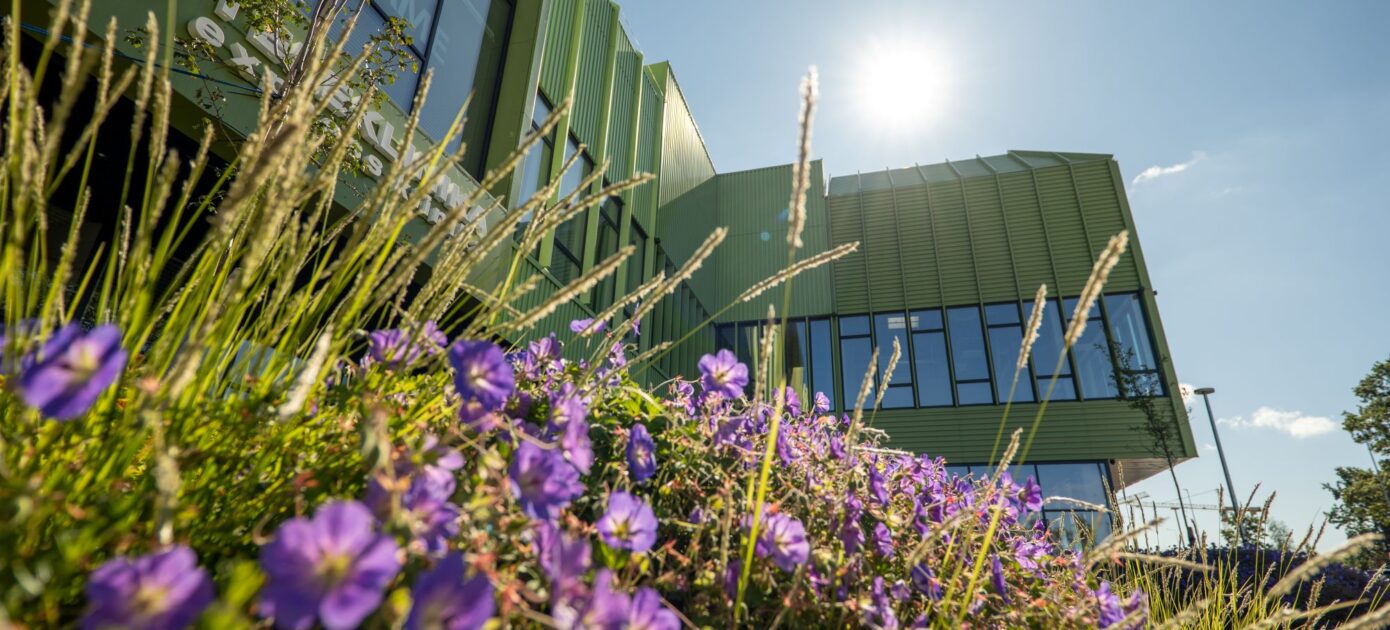
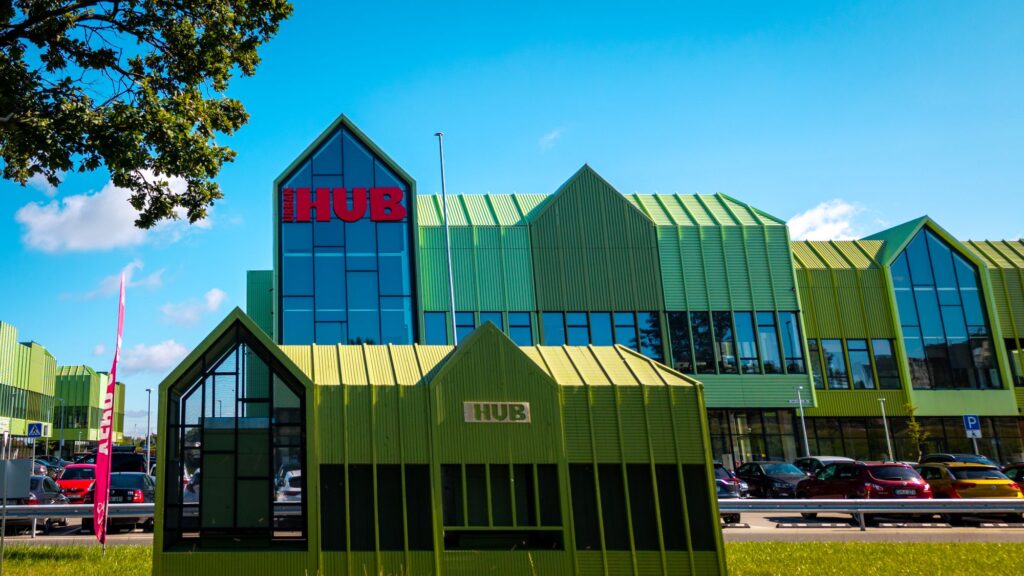
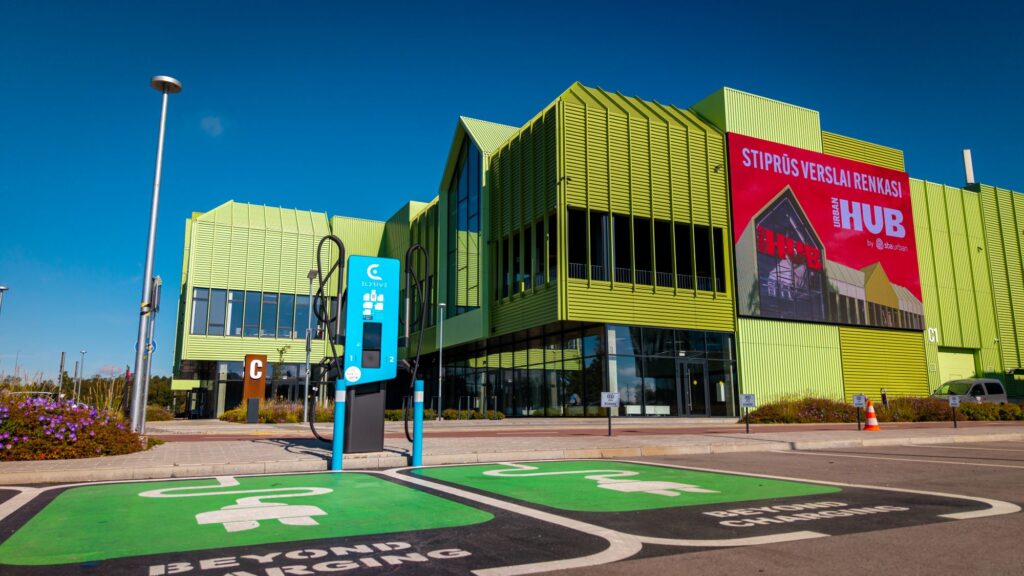
The business and retail complexes Urban HUB, being developed in Vilnius and Kaunas by the real estate company SBA Urban, have been awarded one of the highest BREEAM New Construction sustainability certificates. At present, Urban HUB is among the first in its category in Lithuania – which combines office, warehouse and retail spaces – to achieve one of the top ratings, ‘Excellent’. According to experts, in recent years the implementation of sustainable solutions has been driving the expansion of commercial businesses.
From beehives to a solar power plant
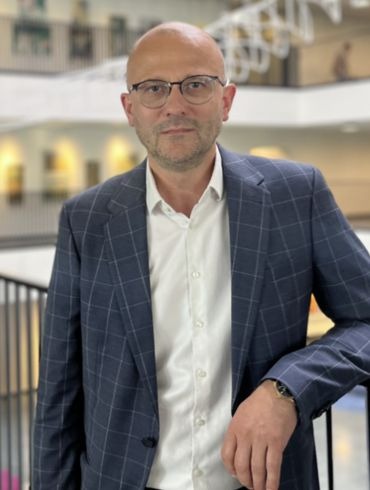
Urban HUB CEO Rolandas Šležas:
From the very first steps in developing the Urban HUB concept, we knew this would not be just another stock-office building that could be likened to a simple warehouse. The building’s architecture, interior spaces, courtyards, landscaping – every decision was made with careful thought about how the people working or visiting here would feel.
Kęstutis Kvietkauskas, Managing Director at UAB SEES Group BREEAM continues:
Sustainability is not only ecology, waste management or consciously managed construction processes. It includes the building’s energy consumption, the project’s convenient location, design solutions that ensure the health and well-being of its users and water conservation. In my opinion, these aspects are among the most important for the businesses and managers based here.
Urban HUB Vilnius achieved more than 72% of the possible sustainability credits according to BREEAM New Construction certificate – ‘Excellent’, the longest-running international standard for sustainable buildings, while the project in Kaunas achieved almost 74%. When developing its retail parks, SBA Urban focused primarily on employee health and well-being, energy and energy efficiency, and water categories. These indicators received the highest ratings in the Urban HUB projects.
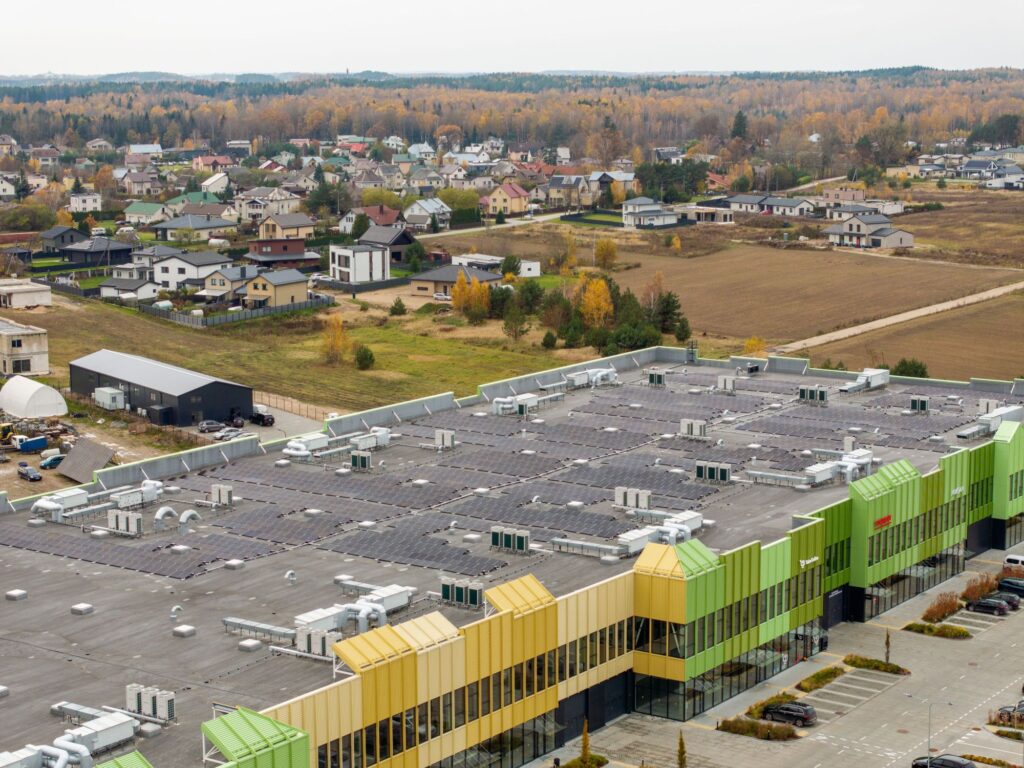
When developing both projects, SBA not only implemented solutions that improve technical efficiency in building management – such as effective energy management technologies and accounting systems that optimise water consumption – but also provided additional solutions. For example, urban beehives have been installed next to Urban HUB Kaunas. Customers and guests enjoy the honey they produce, and this initiative also helps to increase the declining bee population. A nearly 500 kW solar power plant has been installed on the roof of the Vilnius project.
Efficiency and cost-saving – the key business trend for 2025
According to R. Šležas, investments in innovative and sustainable solutions in such projects not only benefit the environment but also encourage businesses to make expansion decisions:
Today, the Urban HUB project in Vilnius has already reached almost 80% occupancy across its 22,000 sqm of space, while in Kaunas it exceeds 80% across 26,000 sqm. Recently, businesses have been placing great emphasis on efficiency. They rent increasingly smaller spaces and need to combine all their activities within them – retail, office and warehousing. This trend has become particularly evident this year, as companies scrutinise every line item when making expansion decisions – how much they will potentially spend on electricity, water, rent and service charges.
The Urban HUB business and retail complexes in Vilnius and Kaunas form one of the largest real estate portfolios of this type in the region. The total development volume is 87,900 sqm, of which 49,600 sqm were completed in 2024. Currently, almost 80% of the space is leased, with more than 75 companies established there, including IKI Lietuva, RIMI, Pepco, Gym+, Paulini, Lonas.
As part of the next stage of the Urban HUB Kaunas development, a further 38,300 sqm of rentable area is planned. The projects are being developed by SBA Urban together with partners EBRD (the European Bank for Reconstruction and Development) and TABA Invest, with financing provided by Artea Bank and Bigbank.